


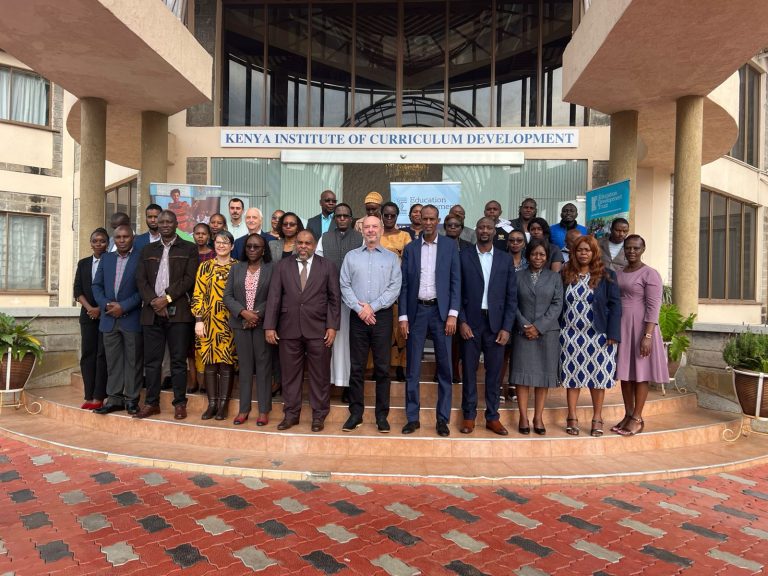
Earlier this year, I had the privilege of joining fellow mathematics tutors from various Teacher Training Colleges (TTCs) in a field data collection exercise focused on foundational numeracy. The initiative, led by Zizi Afrique Foundation in collaboration with the Ministry of Education, brought together educators, researchers, and policy advocates at Thogoto TTC.
Wearing my pink shirt and the hat of a teacher educator, I stepped into this exercise not just as a contributor but as a learner. And what I experienced offered invaluable insights both professionally and personally.
As someone tasked with preparing, mentoring, and assessing future mathematics teachers, I rarely get to see how these trained professionals perform in their duties after graduation. This initiative gave us a rare glimpse into real classrooms, and how early-grade learners respond to mathematics instruction, and more importantly, how the foundational training of their teachers plays out in practice.
It also gave me a chance to consider whether teacher training leads to lasting benefits for learners.
Bridging Theory and Practice
One of the most eye-opening discoveries during the fieldwork was the clear alignment between teachers’ language, attitudes, and strategies, and those adopted by their learners. Learners echoed the exact mathematical vocabulary used by their teachers, and topics that teachers described as “difficult” were similarly perceived as challenging by their pupils. Learners also mirrored the problem-solving methods demonstrated by their teachers, and the classroom resources and practices in use directly influenced how they approached tasks. These patterns highlight significant gaps in teacher training, particularly in preparing educators to foster independent thinking and adaptable learning strategies in their students.
What Happens After Graduation?
As a college-based educator, I often wonder what happens to our graduates once they begin teaching full-time. The truth is, we don’t really know. After the teaching practicum, there’s little follow-up or observation of their classroom work. This is a major gap. Without insight into how they teach after training, we miss valuable feedback that could improve our teacher education programs. While many efforts focus on supporting lower primary learners, we don’t track their progress well as they move to higher grades. As a result, early learning gaps often remain or even worse without consistent, long-term support.
Based on what we observed and learned, here are five practical steps we can take to improve learning in our schools.
- 1. Curriculum Review Must Be Grounded in Reality
Our teacher training curricula should evolve based on actual classroom challenges. Field data should inform updates, especially in areas like learner-centered pedagogy, mathematics language, and inclusive teaching strategies.
- Promote Reflective Practice
Future teachers must learn how to reflect deeply on their work. We can support this by incorporating tools like; Teaching journals, Microteaching, video reviews and case-based discussions.
- Track Alumni, Learn from the Field
We need to build systems to stay connected with our graduates. Even simple tools—like surveys, school visits, or WhatsApp groups—can help us understand their challenges and successes.
- Partner for Ongoing Professional Development
We do not have to do this alone. Training colleges can partner with NGOs, universities, or government agencies to design CPD modules based on real classroom needs. These can be delivered through School-based workshops, Peer learning clusters and Online platforms.
- Link Research and Practice
Let’s make action research a routine part of our teacher education programs. Collaborating with schools on small studies can help generate practical insights and strengthen the bridge between theory and classroom reality.
Beyond Graduation
This experience has reaffirmed something I’ve long believed: teacher training holds immense potential, but its impact can quickly fade without long-term support.
It’s not enough to train teachers for their first classroom experience. We must also equip our education system to walk with them to observe, support, and learn from their evolving journeys.
Suppose we want to transform foundational numeracy in Kenya, truly. In that case, we must invest not just in teachers, but in a sustainable ecosystem that surrounds them—before, during, and well after college.
Ibrahim Njuguna is the Head of Department, Mathematics, Machakos Teachers’ Training College. He can be reached through
Email address: ngushmuli1311@gmail.com


I am an Author in mathematics with Oxford University Press East Africa, also offering freelance services as a proofreader and sales promoter in Njiru Sub-county. I run my own programme as a brand known as Prof Romp Mathematics Fun House in Elementary Schools, partnering with APBET schools in Njiru Sub-county. In fact, an initiative known as Quick-Fire Mental Mathematics Chemshabongo is currently underway in schools. Prof Romp Mathematics Fun House was launched to motivate learners at elementary level of education to change their negative attitude in mathematics, improve in their mental maths capabilities, build up their maths practising habits, and above all, to negate the misconception that maths is a difficult subject. They adopt the slogan- Let’s Do Mathematics, it’s fun.
I hope that information finds you well and hope that we can work together.
Congratulations to Zizi Afrique for channelling all your efforts and resources to transform a system particularly numerical maths for generations.